Sixth century BC
Babylon
Passage & explanation
Explicit identification
Daniel identifies Nebuchadnezzar as the head of gold. His dream introduces successive kingdoms and a kingdom established by God that will endure forever.
Daniel 2:37-44 · KJV ↗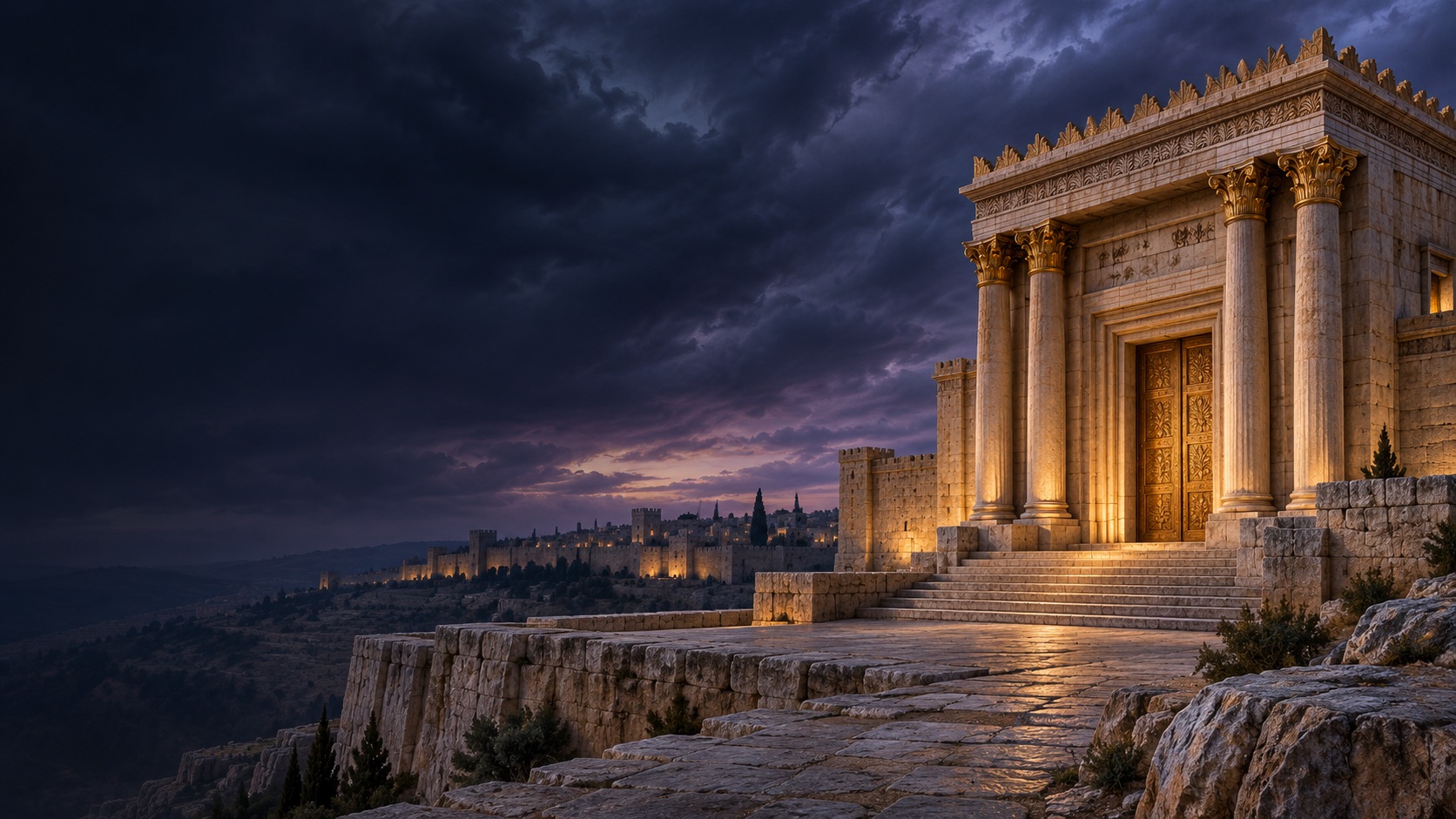
THE LAST TRUMP
Follow prophecy. Recognize the signs.
Watch for the covenant, the man of sin’s revealing, worldwide authority and control over buying and selling. Read these alongside the signs Jesus describes. Follow the timeline and read the passages beside each sign.
Economic control · worship · authority
Watch how power, worship and access to trade come together. This list follows the site’s future reading of these passages. Open each item for the KJV references and the distinction between clear text, interpretation and open details.
 One-world money systemAccess to buying and selling tied to allegiance.
Clear: Revelation describes a mark in the right hand or forehead and restricts buying and selling to those with the beast’s mark, name or number.
Interpretive: This site understands that as a worldwide system of economic control tied to the beast.
Open: A single world currency or cashless payment network could be proposed as a mechanism; neither is specified. Watch for compulsory allegiance controlling trade, not merely a new way to pay.
Revelation 13:16–18 · KJV · Open the money-system research page →
 One-world religionCompulsory worship of the beast and its image.
Clear: The second beast directs worship toward the first beast; refusal to worship its image brings a death threat.
Interpretive: “One-world religion” is a way of describing this worldwide demand for worship and allegiance.
Open: The passage does not require every existing religion to merge into one institution. Examine whom people are required to worship and what happens when they refuse.
 A leader offering answersPersuasive claims, worldwide admiration and demands for loyalty.
Clear: Revelation describes the world’s wonder at the beast and its boastful, blasphemous speech. Paul describes the man of sin exalting himself and presenting himself as God.
Interpretive: A ruler welcomed as a solver of major problems is a possible way such influence could grow.
Open: Scripture does not say he literally has every answer. Popularity, intelligence or successful policies alone do not identify him. Examine the specific claims, actions and allegiance demanded.
Worldwide governing authorityConcentrated power reaching across nations.Clear: The beast receives power over kindreds, tongues and nations.
Interpretive: A one-world government is one proposed form of this authority.
Open: Its modern political structure is not named. Examine the actual reach of power and its demands for worship.
 Deceptive signs and wondersPowerful signs used to draw people into false worship.
Clear: Revelation’s second beast deceives through signs and promotes the image. Paul warns of power, signs and lying wonders.
Open: These passages do not name a modern technology as the mechanism. An impressive sign must still be tested by the truth and the worship it promotes.
 Pressure on those who refusePersecution and exclusion make allegiance costly.
Clear: Revelation describes war against the saints, a death penalty for refusing the image’s worship, and exclusion from trade.
Watch together: Read the economic restriction alongside worship and coercion. Ordinary hardship alone does not establish this whole pattern.
Our response: Revelation calls for the patience and faith of the saints. Watchfulness should strengthen faithfulness to Christ.
Revelation 13:7–10, 15–18 · KJV · Read the call to faithfulness
Country watch: Mexico, Europe, United States & Canada →
Read these alongside the covenant, ending of sacrifice and revealing of the man of sin. This list does not fix the order of every development or establish a date. Continue to the future-watch timeline →
Daniel identifies Nebuchadnezzar as the head of gold. His dream introduces successive kingdoms and a kingdom established by God that will endure forever.
Daniel 2:37-44 · KJV ↗Daniel 8 identifies the two-horned ram with Media and Persia. Cyrus conquered Babylon in 539 BC. Isaiah names Cyrus; Ezra records his proclamation concerning the temple.
Daniel 8:3-4,20; Isaiah 44:28-45:1; Ezra 1:1-4 · KJV ↗Daniel identifies the goat as Greece and its great horn as the first king. Alexander’s conquests and death are the historical connection presented here.
Daniel 8:5-8,21 · KJV ↗Daniel describes four kingdoms arising after the great horn is broken. Alexander’s empire divided among successors through a period of conflict. Daniel 11 traces struggles between northern and southern rulers; the map does not imply an instant, tidy four-way division.
Daniel 8:22; Daniel 11:3-20 · KJV ↗Antiochus IV’s suppression of Jewish worship and desecration of the sanctuary are commonly connected with Daniel 8 and 11. Jesus later invokes Daniel’s abomination warning; compare that warning with the passages about His return.
Daniel 8:11-14; Daniel 11:21-31; Matthew 24:15 · KJV ↗Daniel says Messiah will be cut off. This study reads that in connection with Jesus’ crucifixion. Exact-date calculations depend on the starting decree and calendar assumptions; no calculated crucifixion date is asserted here.
Daniel 9:24-26; Luke 23:33-46 · KJV ↗Jesus foretells the temple’s destruction. Roman forces destroyed Jerusalem’s temple in AD 70. Daniel 9:26 is also read alongside this event.
Luke 21:5-6,20-24; Daniel 9:26 · KJV ↗The two world wars are major examples of nation rising against nation. Matthew 24 does not name these wars or identify 1914 as the beginning of a prophetic clock. Jesus warns that such reports do not by themselves mean the end has arrived.
Matthew 24:6-8 · KJV ↗Israel proclaimed independence on May 14, 1948. Many Christians connect this with Isaiah’s language about a nation born at once. Isaiah 66’s Zion and restoration context must be read before treating that connection as established fulfilment.
Isaiah 66:7-13 · KJV ↗Jesus calls His followers to discern, endure and watch. Deception, persecution and the gospel’s proclamation matter alongside conflict. Current headlines can prompt study; they cannot establish a return date.
Matthew 24:4-14,32-44; 1 Thessalonians 5:1-11 · KJV ↗Daniel describes a covenant confirmed with many for one week, with sacrifice stopped in its middle. Watch for an agreement that could fit those details: examine its parties, terms, duration and connection to worship. The passage says confirm a covenant; it does not explicitly describe a signed peace treaty. A signing alone does not establish fulfillment or start a verified prophetic countdown.
Daniel 9:27 · KJV ↗Paul describes the man of sin taking his seat in the temple of God. Connecting this with a future Jerusalem sanctuary requires examining the temple passages together. They give no construction schedule.
2 Thessalonians 2:3-4; Revelation 11:1-2 · KJV ↗A sacrifice must be operating before it can be stopped. Resumed regular sacrifices are therefore an important marker in this future reading. Temple construction and sacrifice are separate developments: Ezra records offerings before the temple foundation was laid. Their relative order is not fixed by this chart.
Daniel 9:27; Daniel 12:11; Ezra 3:1-6 · KJV ↗Daniel 9 places sacrifice and offering ceasing at the midpoint of the week. Using the 360-day reckoning explained in the Daniel study, each half is 3½ years or 1,260 days. Daniel also speaks of the daily sacrifice being taken away. Chapter 12 connects that removal with the abomination and gives 1,290 days, followed by a blessing at 1,335 days. What every endpoint represents remains a separate question.
Daniel 9:27; Daniel 12:11-12 · KJV ↗Paul warns of a falling away and the revealing of the man of sin in his discussion of Christ’s coming and our gathering. This opponent exalts himself above all that is called God and sits in God’s temple, presenting himself as God. Test claims against those specific actions and the deception Paul describes. Popularity, political office or involvement in an agreement does not by itself identify him.
2 Thessalonians 2:1-12 · KJV ↗Jesus describes the abomination, flight and great tribulation before the heavenly signs and gathering. Compare the man of sin with that warning and the persecution of believers. Revelation’s forty-two months correspond to 1,260 days in the framework shown on the comparison charts. The beast’s mark and opposition are part of this study.
Matthew 24:15-31; 2 Thessalonians 2:3-4; Revelation 13:5-18 · KJV ↗Revelation describes the beast receiving authority over all kindreds, tongues and nations. A one-world government is one proposed way that authority could operate. Watch how governing powers unite, whom they serve and whether they demand allegiance and worship. The passage describes the reach of the beast’s power without specifying a modern constitution or a particular international organization.
Revelation 13:2-8; Revelation 17:12-14 · KJV ↗Revelation says buying and selling are restricted to those bearing the beast’s mark, name or number. Watch developments that could tie access to trade to compulsory allegiance. A cashless society, credit or debit system could provide a means of control, but the passage does not say that money disappears or identify ordinary cards, digital payments or banking technology as the mark. Read the trade restriction together with the beast’s worship and persecution.
Revelation 13:11-18; Revelation 14:9-12 · KJV ↗Paul places resurrection and transformation at the last trump. Revelation’s seventh trumpet announces the kingdom, judgment and reward. The seventh-trumpet study connects these passages to place the gathering after the tribulation signs and before the final vials; each step of that connection is explained there.
1 Corinthians 15:51-52; 1 Thessalonians 4:16-17; Revelation 11:15-18 · KJV ↗Historical events and prophetic interpretations are distinguished. Future entries can overlap; their layout does not establish every event’s order. The passages must establish the connections, including the relative timing of an agreement, temple worship and the man of sin’s revealing.
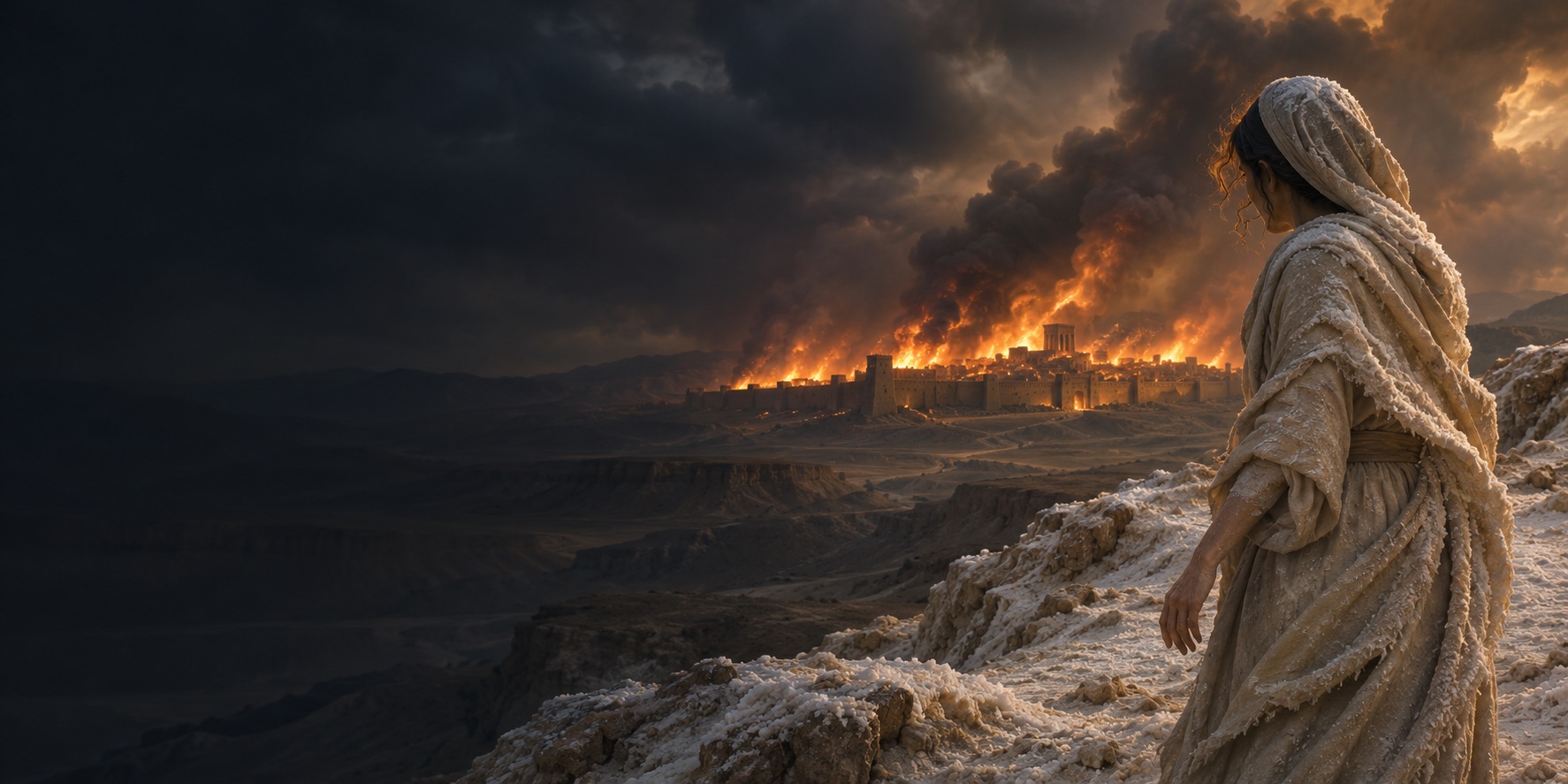
Watchfulness · Luke 17:32
Jesus says that people in Sodom ate, traded, planted and built right up to the day Lot left and judgment fell. He compares that day to the revealing of the Son of man. Then He tells those on the rooftop or in the field to leave their belongings behind. Lot’s wife looked back after they had been warned to flee.
What would be hard to leave behind if obeying Christ meant letting it go? Jesus puts this warning next to His words about seeking to save one’s life. Ordinary life can make us feel secure right up to the moment that security is gone.
Lot’s escape before the fire illustrates deliverance before judgment. The Last Trump sees a parallel with the gathering before the final bowls. Luke gives the warning without naming a trumpet. The seventh-trumpet case comes from comparing Paul’s resurrection passage with Revelation.
Jesus warns that many false prophets will arise and deceive many (Matthew 24:11,24). Paul describes deceivers growing worse, deceiving others and being deceived (2 Timothy 3:13). These are warnings to remain discerning, not a formula for counting modern groups or calculating the return of Christ.
Read the whole claim against Scripture. Deuteronomy 18:20–22 addresses a prediction spoken in the Lord’s name that does not come to pass. Deuteronomy 13:1–5 warns that even a fulfilled sign cannot justify following other gods. First John 4:1–3 calls believers to test spirits and examines what is confessed about Jesus Christ. A striking sign or confident voice is not sufficient evidence.
Read the tests in context · KJV ↗Record exactly what was asserted: a dated prediction claimed as revelation, a proposed reading of a passage, or a teaching about God and Christ. These claims require different examinations. A disagreement about rapture timing alone does not establish that someone is a false prophet. A prediction expressly made in God’s name must be examined as such, including whether it actually failed.
Examine a named teacher’s or organization’s documented teaching, rather than assigning the same claim or motives to every member. A case needs the original quotation or recording, speaker, publication date, claimed authority, predicted event and deadline, outcome, and any correction or response. Separate established evidence from unresolved allegations.
The prediction-accountability ledger is the place for these cases. Its unverified records remain clearly marked; they are not completed findings against anyone.
Open prediction accountability →Matthew 24:4–5,11,24; 2 Timothy 3:13–17 · KJV ↗ · Read the warning. Check the source. Test the teaching.
Keep the stated relationships visible. Jesus places the heavenly signs after tribulation and before the assembly of the elect. Peter, quoting Joel, places the sun’s darkening and the moon’s change before the Day of the Lord. Connecting those descriptions with Revelation’s seal visions is a comparison to examine.
Matthew 24:29–31 describes the darkened sun, the moon withholding its light, stars falling and the powers of heaven shaken. The Son of man appears, and His angels assemble the elect with a great trumpet. A rapture placed before all tribulation must explain why this assembly is treated as a different event.
Matthew 24:29–31 · KJV ↗Joel 2:31 and Acts 2:20 put the darkened sun and blood-like moon before the Day of the Lord. If a model starts that day before the signs, it must account for this order. Whether the rapture starts that day is a separate interpretive question; these verses do not explicitly say so.
Joel 2:30–32; Acts 2:16–21 · KJV ↗Revelation 6:12–17 describes an earthquake, the sun becoming black, the moon becoming as blood, falling stars and heaven departing like a scroll. The people in the vision announce the great day of wrath. Compare the wording and context with Matthew and Joel; shared imagery does not by itself establish that every description belongs to exactly the same instant.
Revelation 6:12–17 · KJV ↗No eclipse, astronomical forecast or modern event is identified here as the fulfilment. These passages supply no date for Christ’s return.
Revelation 7:1–8 numbers 144,000 sealed from Israel’s tribes. The command delays harm until God’s servants are sealed. Revelation 9:4 then limits the locust judgment to people without God’s seal. Presence on earth during judgment must be distinguished from being its target.
The restriction in Revelation 9:4 is explicit for that judgment. It is not a blanket statement that every sealed person is immune to every later harm. Compare each judgment’s stated targets before extending the protection beyond what the passage says.
Revelation 7:1–8; 9:1–4 · KJV ↗Revelation 14:1–5 shows 144,000 with the Lamb, redeemed from the earth and firstfruits unto God and the Lamb. It does not explicitly assign their place at the marriage supper. Their relationship to the bride and invited guests must be argued from the passages rather than assumed.
Read the marriage-feast study →First Thessalonians 5:9 says believers are not appointed to wrath. The question is whether that promise alone requires leaving earth before all tribulation. Protection during a judgment is another possibility that the sealed servants bring into the discussion. Neither presence nor sealing by itself settles the timing of the church’s rapture.
Open the pre-trib Scripture tension →The future-week argument connects Daniel’s covenant-maker with the opponent described by Paul. Neither passage explicitly says that signing an agreement is the moment the man of sin is revealed. Compare the covenant, cessation of sacrifice, temple claim and deception before identifying an event or person.
Read the evidence and objections for a future seventieth week →
Daniel 9:27; 2 Thessalonians 2:1-8 · KJV ↗Revelation describes two witnesses prophesying for 1,260 days, their death and restoration to life, and the sounding of the seventh trumpet later in the chapter. It also describes 144,000 sealed from Israel’s tribes. Their identities and the overlap of these scenes with other periods must be examined separately.
Revelation 7:1-8; Revelation 11:3-15; Revelation 14:1-5 · KJV ↗The seventh-trumpet reading places the gathering before the final vials, with the marriage supper and Christ’s return leading into His reign. Calling the vials the final outpouring does not erase the earlier wrath language in Revelation 6 and 11.
Revelation 6:16-17; Revelation 11:18; Revelation 15:1,7; Revelation 16:1; Revelation 19:7-16; Revelation 20:4-6 · KJV ↗The daily sacrifice’s removal and abomination provide the reference point in Daniel 12:11. Verse 12 pronounces a blessing on the one who reaches 1,335 days. Temple cleansing and a precise inauguration date for the millennium are proposed explanations, not events expressly named at those endpoints.
Daniel 12:11-12 · KJV ↗Ken Johnson’s Daniel 11 Time Map is a research reference for the historical sequence; the rapture argument must be established from Scripture. This chart is an original simplified study, not a reproduction of his exact-date calculations.