
THE HAND OR FOREHEAD
A mark demanded of all.
Verse 16 names small and great, rich and poor, free and bond. It locates the mark in the right hand or forehead.
Open the illustrated study →Read Revelation 13:16 · KJV ↗Scripture first. Examine every claim.
Where does Scripture place the rapture?
Read the text. Compare the interpretations.
Symbolic artwork · Interpretations examined through Scripture · No dates predicted
REVELATION 13:16–18 · THE MARK & THE NUMBER
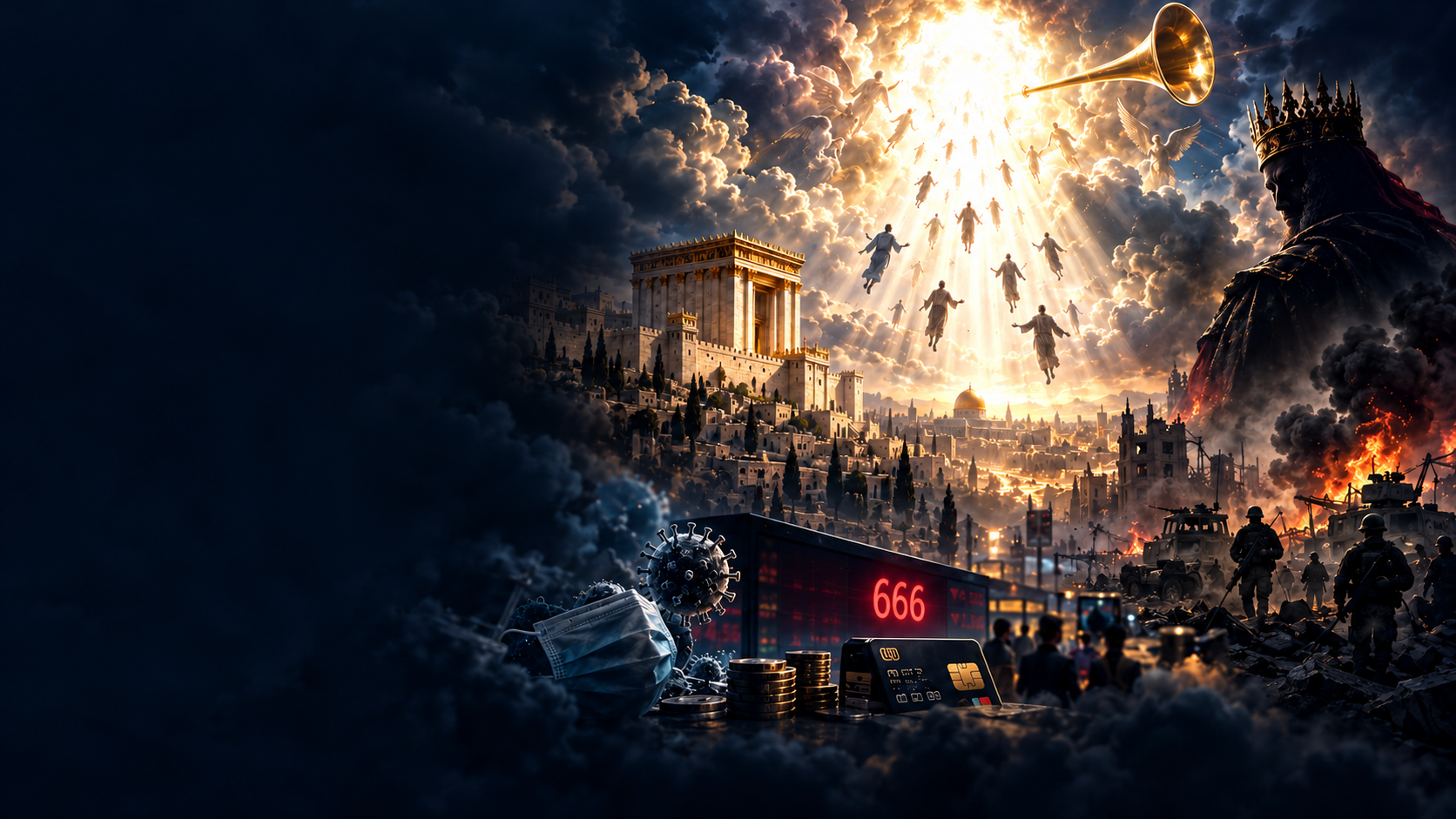
Revelation connects a mark in the right hand or forehead with access to trade. The warning concerns worship and allegiance as well as economic pressure.
“And that no man might buy or sell”
Read Revelation 13:16–18 · KJV ↗
THE HAND OR FOREHEAD
Verse 16 names small and great, rich and poor, free and bond. It locates the mark in the right hand or forehead.
Open the illustrated study →Read Revelation 13:16 · KJV ↗THE NUMBER OF THE BEAST
Verse 18 calls for wisdom and understanding in counting the beast’s number. The artwork is symbolic; the passage does not say the mark must look like three visible sixes.
Open the illustrated study →Read Revelation 13:18 · KJV ↗BUYING & SELLING
Verse 17 excludes those without the mark, the beast’s name or its number from buying and selling.
Open the illustrated study →Read Revelation 13:17 · KJV ↗This site understands the passage as pointing toward a worldwide system that controls access to commerce. The explicit warning is exclusion from buying and selling. A single currency, central bank or particular payment technology is not named; those are possible mechanisms, not details supplied by the text.
Read the wider context: Revelation 13:7–18 · KJV ↗WORSHIP · PRESSURE · FAITHFULNESS
Revelation 14 warns against worshipping the beast and receiving its mark, then calls attention to the patience and faith of the saints. Read the warning together with the call to remain faithful to Jesus.
Revelation 14:9–12 · KJV ↗START HERE · DANIEL 9:24–27
Before comparing the rapture views, understand the timetable. Daniel’s seventy “weeks” are read here as seventy sevens of years, appointed for his people and holy city: 70 × 7 = 490 years.
The command to restore and build Jerusalem begins the timetable. The street and wall are rebuilt in troublous times.
7 × 7 × 360 = 17,640 daysDaniel 9:25The next sixty-two weeks follow the first seven. After this combined sixty-nine, Messiah is cut off; the city and sanctuary are destroyed.
62 × 7 × 360 = 156,240 daysDaniel 9:25–26Daniel 9:27 describes the final week: a covenant with many, followed by the ending of sacrifice and offering in the middle of the week.
1 × 7 × 360 = 2,520 daysDaniel 9:27The interval is inferred by this reading; Daniel does not give its duration. The stages show order, not a proportional calendar or a predicted return date.
THE 360-DAY RECKONING
Revelation gives forty-two months and 1,260 days, and describes a related period as a time, times and half a time. Reading those as the same three-and-a-half-year duration yields 30-day months and 360-day years. Applying that pattern to Daniel’s weeks is an interpretive connection.
Revelation 11:2–3; 12:6, 14; 13:5; Daniel 7:25This is a prophetic reckoning, not a claim that the ordinary Jewish calendar has always had exactly 360 days. Choosing a historical starting decree and converting to solar dates requires further assumptions.
WHY THE FINAL WEEK REMAINS FUTURE
Daniel 9:24 names the purposes of the seventy weeks, including reconciliation for iniquity and everlasting righteousness. Verse 26 describes Messiah’s death and the city’s destruction after the first sixty-nine; verse 27 describes the final week and its midpoint. The case for future fulfillment connects these promises with Christ’s return.
Jesus places Daniel’s abomination before great tribulation and His coming. Paul says the Lord will destroy the man of sin at His coming. These passages form the case for a final crisis still ahead.
Daniel 9:24–27; Matthew 24:15–31; 2 Thessalonians 2:1–8Examine the future-week case ↗Other Christians understand the final week differently. The interval and future antagonist are argued connections, not explicit names or dates in Daniel 9.
KINGDOMS · MESSIAH · JERUSALEM
Follow the events. Click each milestone icon to read the passage and examine its historical connection. The solid line follows recorded history; the dashed continuation follows the prophetic events being examined.
The kingdom Daniel knew
Daniel identifies Nebuchadnezzar with the head of gold. The vision looks beyond his kingdom to the kingdoms that follow.
Daniel 2:37–44Cyrus and the return
The Cyrus Cylinder records the Persian conquest of Babylon. Isaiah names Cyrus; Ezra records his proclamation about rebuilding the temple. The cylinder is historical evidence for Cyrus, not a quotation of Ezra’s decree.
Isaiah 44:28–45:1; Ezra 1:1–4; Daniel 8:20British Museum · Cyrus Cylinder ↗The city and its walls
Nehemiah records Artaxerxes authorizing his journey and rebuilding work. Compare that restoration command with Daniel 9:25; identifying the starting decree is part of the chronological argument.
Nehemiah 2:1–8; 6:15; Daniel 9:25Greece and its successors
Alexander’s conquests transform the region. Daniel names Grecia as the goat’s kingdom; the great horn and successor kingdoms are read alongside Alexander and the division after his death.
Daniel 8:5–8, 21–22The Met · Alexander’s conquests ↗The Christian fulfillment reading
Daniel 9:26 places Messiah’s cutting off after the first sixty-nine weeks. Christians read this alongside Jesus’ crucifixion. This rail does not assert an exact calculated crucifixion date.
Daniel 9:25–26; Luke 23:33–46A recorded destruction
Roman forces destroy Jerusalem’s temple. Jesus’ warning about its destruction and Daniel’s city-and-sanctuary language are read beside this recorded event.
Luke 21:5–6, 20–24; Daniel 9:26The Met · Jerusalem and the Second Temple ↗One final seven in the reading presented here: 2,520 prophetic days, with sacrifice stopped at the midpoint. Its placement remains a Scripture argument to examine.
Read the future-week case ↗These dates establish the historical sequence. The connections to prophecy are explained at each milestone; the spacing is not a scale of elapsed years.
Explore the full history & watchfulness timeline ↗COMPARE THE VIEWS
Paul places resurrection at the last trump; Revelation’s seventh trumpet announces the kingdom, judgment and reward. Examine the case that these passages describe the same event, then test the pre-, mid-, pre-wrath and post-tribulation sequences against Scripture.
Find a church or minister’s own statement → · Invited ministers: sign in
Before comparing the timelines
One label cannot describe a whole end-times position. Keep these questions separate when reading a teacher or testing a view.
Revelation’s fulfilment
Past events, the course of history, future events, or recurring patterns? Preterist, historicist, futurist and idealist readings answer this question; some readers combine them.
The millennium
Premillennial, amillennial and postmillennial views concern the thousand years in Revelation 20 and their relationship to Christ’s return.
The gathering
The charts below compare pre-tribulation, mid-tribulation, pre-wrath, post-tribulation and this site’s seventh-trumpet proposal.
Revelation: Preterist readings place many events in the early Christian past; historicist readings trace events across history; futurist readings place major fulfilments ahead; idealist readings emphasize patterns recurring throughout the church’s life.
Millennium: Premillennialism places Christ’s return before a future millennial reign. Amillennialism understands the thousand years as the present age of Christ’s reign, ending at his return. Postmillennialism expects Christ’s return after an age of gospel advance. Each broad category contains variations.
Partial and full preterism differ: Partial preterists retain a future bodily return, resurrection and final judgment. Full preterism places their fulfilment in AD 70. Kenneth Gentry explicitly distinguishes his partial-preterist approach from that full-preterist claim.
Ask for the specific claim: A millennium view does not, by itself, identify someone’s tribulation timing. Gathering models can also overlap: identifying the trumpet and placing the gathering after tribulation answer related questions. Read the teacher’s own explanation.
Further reading: Brian J. Tabb’s commentary, sections on interpretation and Revelation 20; Kenneth Gentry’s explanation of his own position. These describe interpretive frameworks; the passages still decide the argument.
These five charts use a future-week framework. They do not represent every Christian reading of prophecy. Did Jesuits invent the rapture? Examine the historical claim →
Chapter order, not a scaled timeline. The extent of overlap between visions is disputed; no additional dates are assigned here.
Place their 1,260 days of testimony, death and raising three and a half days later alongside the gathering and supper. Their ascent is narrated before the seventh trumpet; the supper passage does not name them as guests.
Every model must explain its proposed order. Compare the five views and read the evidence →
Daniel 9:27 describes a covenant with many for one week. Jesus describes deception, wars and famines as the beginning of sorrows; Matthew does not explicitly assign all of them to its first three and a half years.
Daniel 9:27; Matthew 24:4–8Daniel places the ending of sacrifice in the middle of the week. Jesus warns of the abomination of desolation. Paul describes the man of sin sitting in the temple of God and claiming to be God. This framework connects those passages with the midpoint crisis, not necessarily the first recognition or revealing of Antichrist. In this site’s reading, he confirms the covenant at the beginning of the seven years and may be recognizable before then. Connecting Daniel’s covenant-maker with Paul’s man of sin is an interpretation; Paul does not give his revealing a numbered point within the week.
Daniel 9:27; Matthew 24:15–16; 2 Thessalonians 2:3–4After the abomination warning, Jesus speaks of great tribulation and days shortened for the elect. Revelation describes the beast’s authority for forty-two months and war against the saints. Compare each view’s placement of the gathering and divine wrath.
Matthew 24:21–22; Revelation 13:5–7These charts compare futurist rapture sequences within a future-week framework. Other readings of Daniel 9 are summarized below the timetable.
Light: a reasonable explanation answers the difficulty. Medium: a substantial connection needs careful explanation. Heavy: the particular claim is difficult to reconcile with the cited text.
These are this site’s interpretive assessments of individual arguments, including the seventh-trumpet view. Read the objection and strongest supporting answer together. A dot grades a claim, and conditional grades name the version being tested. No dot means no assessment is shown here. An unmarked icon can open a topic study or a question already marked elsewhere.
Select a Scripture question for the objection and response; other icons open topic studies.
Rapture is shown before the week in this view. Placing it before the trumpets and vials does not by itself settle Paul’s last-trump language or his man-of-sin sequence.
144,000 in a pre-trib reading: placed after the rapture, serving during the tribulation. This icon is second for easy access; it does not assign an exact sealing date. Revelation 7:1–8 describes their sealing, but does not expressly date it in relation to the rapture. Compare a pre-trib explanation ↗
Revelation 11:18 already speaks of wrath; Revelation 15:1 calls the seven plagues the last, in which God’s wrath is filled up. “Before the vials” must not be treated as “before every mention of wrath.”
Read the passages · KJV ↗FUTURE SEVENTIETH WEEK · 7 PROPHETIC YEARS
2,520 days · Understand Daniel’s timetableCompare the same questions across all five views →
Open a question for the objection, the supporting answer and the passage. These are interpretation tests, not a score of anyone’s faith.
Heavy tension · this site’s assessment. Paul discusses our gathering and says that day follows the falling away and revealing of the man of sin. An earlier gathering needs a reason to separate them.
Paul introduces Christ’s coming and our gathering before naming the falling away and man of sin (2 Thessalonians 2:1–4). Matthew 24:29–31 and Mark 13:24–27 place a trumpet gathering after tribulation. A pre-trib reading needs to show why these passages describe different gatherings or people.
2 Thessalonians 2:1–4 connects Christ’s coming and our rapture with a falling away and the revealing of the man of sin. What warrants placing a church rapture before those events?
Supporters distinguish the rapture from the day of the Lord and argue that the prior signs concern the latter. They also appeal to deliverance from wrath.
Read verses 1–4 together. Does the distinction follow from the passage, or does the timeline supply it?
2 Thessalonians 2:1–8Heavy tension · this site’s assessment.Applies to the stated claim. If the Day starts before the signs that announce it, the order conflicts with Acts 2:20.
Acts 2:20 and Joel 2:31 put the heavenly signs before the Day of the Lord. If that day begins at a pre-trib rapture, the proposed order needs explanation. This question concerns that version of the view; other pre-trib teachers draw the boundaries differently.
Sun, moon and stars: Matthew 24:29–31 places the darkened sun and moon, falling stars, and shaking heavens after tribulation and before the trumpet-led assembly of the elect. Acts 2:20 places the darkened sun and blood-like moon before the Day of the Lord. A pre-trib model must explain both relationships; the latter passage alone does not explicitly name the rapture.
Compare the cosmic-sign passages →
Acts 2:20 places the sun’s darkening and the moon’s change to blood before the great and notable day of the Lord. If a pre-tribulation model begins that day at a gathering before those signs, its order conflicts with the stated before/after sequence unless it can establish a different referent or boundary.
Some distinguish the broad day-of-the-Lord period from its climactic judgment, or distinguish different occurrences of heavenly signs.
The proposed meaning of the day and the signs needs to remain consistent across the passages.
Acts 2:20; Joel 2:30–31; Revelation 6:12–17Heavy tension · this site’s assessment. Jesus places the trumpet gathering after the distress. An earlier church gathering requires a distinct gathering that can be shown from Scripture.
Matthew 24:29–31 and Mark 13:24–27 place the elect’s gathering after tribulation. Paul also describes a gathering with a trumpet (1 Thessalonians 4:16–17). An earlier church rapture depends on showing that these passages concern different people or events.
Matthew 24:29–31 places the gathering of the elect after tribulation. Separating it from Paul’s catching up requires an argument about who the elect are.
Supporters commonly read Matthew’s elect as Israel or believers gathered at the later public return, rather than the church raptured earlier.
Compare the people, trumpet, clouds and gathering in both passages. Similar wording alone does not prove identity; a distinction also needs evidence.
Matthew 24:29–31; 1 Thessalonians 4:16–17Light tension · this site’s assessment. An early gathering leaves room before the battle. A claim that later believers are excluded needs separate support.
Revelation 7 and 14 do not exclude tribulation believers or the 144,000 from the supper. Some pre-trib teachers distinguish a heavenly marriage from a later supper. That answer needs scriptural support, but exclusion is not part of every pre-trib view.
Revelation 11 narrates the witnesses’ ascent before the seventh trumpet. A later supper could include them, and Revelation 19 leaves their attendance and the length of the meal open. Babylon’s judgment precedes the marriage announcement in Revelation 19. Placing the supper during the vials needs a separate argument.
Read the two witnesses study →
And the 144,000? Revelation 7:4–8 numbers the sealed servants from Israel’s tribes. Revelation 14:1–5 shows 144,000 with the Lamb, redeemed from the earth and described as firstfruits unto God and the Lamb. Where do they fit in the marriage and supper? Those passages do not expressly assign their place at the feast or exclude them. Their participation is an open question; pre-tribulation teachers do not all exclude them from the supper.
Revelation 7:4–8; 14:1–5; 19:7–9 · KJV ↗
The question: If believers are saved during the tribulation but the marriage feast has already finished, where do those believers belong? Revelation 7:9–14 describes a multitude washed in the Lamb’s blood who came out of great tribulation. Their place must be explained, rather than assuming that everyone still on earth has rejected Christ.
Thomas Ice distinguishes a heavenly marriage from a later earthly supper and includes tribulation believers among the supper’s guests. Thus, exclusion from the supper is not a necessary claim of every pre-trib model.
Thomas Ice · The Marriage of the Lamb · original argument ↗Does Scripture warrant separating the marriage and supper in this way? Compare the bride, the called guests, the multitude from great tribulation, and the resurrection of those who refused the beast. The invitation parables warn against refusal, but do not explicitly identify all people remaining on earth at a chosen moment as refusers.
Matthew 22:1–14; Luke 14:16–24; Revelation 7:9–14; 19:7–9; 20:4–6 · KJV ↗Medium tension · this site’s assessment.Applies to the stated claim. God protects sealed servants through a particular judgment. Explain why removal is required for the church.
Revelation 7:1–8 and 9:4 describe servants sealed and protected during judgment. A pre-trib reading distinguishes these servants from the church. It must explain why the church needs removal when these servants receive protection on earth.
The question: If deliverance from wrath requires removal from earth before the whole tribulation, how do the 144,000 sealed servants fit? Revelation 7:1–8 describes God’s servants being sealed before harm is released. Their role must be explained alongside the promise of deliverance in 1 Thessalonians 5:9.
Being present during judgments is not necessarily the same as being their target. Revelation 9:4 restricts the locust judgment to people without God’s seal. This provides a textual basis for protection within a judgment setting. It does not, by itself, establish immunity from every kind of suffering or identify the scope of every later judgment.
Does “not appointed to wrath” require removal, or can God preserve His people through a judgment? If a pre-trib argument distinguishes the church from the sealed servants of Israel, what passages establish that distinction and its consequences for deliverance? Distinguish persecution by the beast from judgment sent by God. Do not assume the 144,000 suffer divine wrath simply because they are on earth.
Revelation 7:1–8; 9:1–4; 14:1–5; 1 Thessalonians 5:1–11 · KJV ↗360-day prophetic-year framework. Event spacing is schematic; the gathering arrows do not predict dates. Daniel 12’s 1,290 and 1,335 days are separate counts.
Purple band: broad pre-trib reading. Begins with the rapture; continues through the tribulation and beyond Christ’s return into the Millennium. See timing differences.
◆ Midpoint: sacrifice stops; the temple is profaned.
First half / final half in the future-week reading. Great Tribulation describes persecution; the views differ on when it ends and wrath begins.
The purple band shows a broad pre-trib reading: John Walvoord places its beginning at the rapture, before the tribulation, and includes the Millennium. The pointed end means it continues beyond the return shown on this chart. No interval between the rapture and the seventieth week is measured here.
Pre-trib teachers do not all use the same boundary. Walvoord also records the older Darby/Scofield approach, which places its beginning around Christ’s return and the establishment of His kingdom. A pre-trib rapture does not, by itself, fix the start of the Day of the Lord.
Broad and narrow uses: some pre-trib interpreters distinguish the whole period of divine intervention from the particular day of Christ’s return. That distinction is one response to the signs that precede the Day of the Lord.
Joel 2:31 and Acts 2:20 put the sun and moon signs before the Day of the Lord. Does the proposed broad/narrow distinction fit those passages? The red B marker opens that objection and the supporter’s response.
1 Thessalonians 5:1–9; Joel 2:30–31; Acts 2:20Examine the B questionSources: John Walvoord: broad timing and older pre-trib readings; Spirit & Truth: broad and narrow uses.
SCRIPTURE QUESTIONS · OPEN THE FULL STUDY
The questions identify arguments to examine. Each link opens the full objection, response and Scripture test; their order does not add dates to the timeline.
Rapture → tribulation → Christ’s return. Compare this seven-year sequence with Daniel 9:27 and the linked passages. Event spacing is schematic; the arrows do not predict dates.
Light: a reasonable explanation answers the difficulty. Medium: a substantial connection needs careful explanation. Heavy: the particular claim is difficult to reconcile with the cited text.
These are this site’s interpretive assessments of individual arguments, including the seventh-trumpet view. Read the objection and strongest supporting answer together. A dot grades a claim, and conditional grades name the version being tested. No dot means no assessment is shown here. An unmarked icon can open a topic study or a question already marked elsewhere.
Select a Scripture question for the objection and response; other icons open topic studies.
Rapture is shown at the midpoint. Identifying that point with a particular trumpet requires an argument; the trumpet and vial series do not independently establish a midpoint rapture.
Revelation 11:18 already speaks of wrath; Revelation 15:1 calls the seven plagues the last, in which God’s wrath is filled up. “Before the vials” must not be treated as “before every mention of wrath.”
Read the passages · KJV ↗FUTURE SEVENTIETH WEEK · 7 PROPHETIC YEARS
2,520 days · Understand Daniel’s timetableCompare the same questions across all five views →
Open a question for the objection, the supporting answer and the passage. These are interpretation tests, not a score of anyone’s faith.
Medium tension · this site’s assessment. Daniel places the stopping of sacrifices there. The gathering needs its own scriptural link to that point.
Daniel 9:27 places the stopping of sacrifice at the midpoint; it does not place a resurrection there. That connection needs support from the trumpet passages in 1 Corinthians 15:51–52 and Revelation 10:7; 11:15–18.
Daniel 9:27 places the cessation of sacrifice in the middle of the week. It does not explicitly place the resurrection or catching up there.
Supporters connect Daniel’s half-week with other passages about wrath and the trumpet.
Show every connecting step. A midpoint sacrifice event is not itself a midpoint rapture text.
Daniel 9:27; 1 Corinthians 15:51–52Heavy tension · this site’s assessment. If the starting day is known and the rapture falls exactly halfway through the week, its day can be calculated. An unknown hour still leaves a known day.
If a recognizable covenant starts the week and the rapture follows exactly 1,260 days later, its day can be calculated. Matthew 24:36 names both day and hour; leaving the hour unknown does not keep a calculated day unknown. A supporter must explain whether the warning concerns another event or the starting day remains unknown. No current treaty or return date is identified here.
If a recognizable treaty or covenant begins a seven-year period and the gathering is fixed at its midpoint, the model appears to make that gathering calculable. How does this fit the unknown-day warning? Daniel 9:27 mentions a covenant for one week; it does not explicitly call it a seven-year peace treaty.
Supporters distinguish the events addressed by those warnings, or dispute whether the starting event can be recognized precisely.
Establish both premises: that the starting event can be identified and dated, and that the unknown-day warning concerns this gathering. Then show how a fixed midpoint avoids supplying a knowable date. Matthew 24:36 states the unknown-day warning.
Matthew 24:36–44; Daniel 9:27Heavy tension · this site’s assessment. Jesus places the gathering after the distress He describes. An exact midpoint gathering before that distress reverses the order.
Matthew 24:15–31 and Mark 13:14–27 place the elect’s gathering after great tribulation. A church rapture at the midpoint, before that distress, requires evidence that Jesus describes a different gathering or audience.
Matthew 24 places heavenly signs and the gathering after the tribulation it describes. A midpoint gathering must explain why that is a different gathering or a different tribulation.
Some distinguish Israel’s later gathering from the church’s earlier catching up.
Define “tribulation” consistently and establish the audience distinction from the text.
Matthew 24:15–31Light tension · this site’s assessment. This view leaves room for the bride to be ready before the battle. A supper after the witnesses ascend can also accommodate them.
Revelation 19:7–14 announces the marriage before the rider appears. This view allows an interval before the battle. Revelation 11:11–15 places the witnesses’ ascent before the seventh trumpet; a later supper could include them.
Revelation 11 narrates the witnesses’ ascent before the seventh trumpet. A later supper could include them, and Revelation 19 leaves their attendance and the length of the meal open. Babylon’s judgment precedes the marriage announcement in Revelation 19. Placing the supper during the vials needs a separate argument.
Read the two witnesses study →
A midpoint gathering leaves time before the battle. The supper can follow the witnesses’ ascent even if they rise after the church is gathered.
Distinguish the marriage announcement from the supper itself. Revelation does not identify the guests or date the meal to the vials.
360-day prophetic-year framework. Event spacing is schematic; the gathering arrows do not predict dates. Daniel 12’s 1,290 and 1,335 days are separate counts.
◆ Midpoint: sacrifice stops; the temple is profaned.
First half / final half in the future-week reading. Great Tribulation describes persecution; the views differ on when it ends and wrath begins.
SCRIPTURE QUESTIONS · OPEN THE FULL STUDY
The questions identify arguments to examine. Each link opens the full objection, response and Scripture test; their order does not add dates to the timeline.
First half → rapture → final half → Christ’s return. Compare this seven-year sequence with Daniel 9:27 and the linked passages. Event spacing is schematic; the arrows do not predict dates.
Light: a reasonable explanation answers the difficulty. Medium: a substantial connection needs careful explanation. Heavy: the particular claim is difficult to reconcile with the cited text.
These are this site’s interpretive assessments of individual arguments, including the seventh-trumpet view. Read the objection and strongest supporting answer together. A dot grades a claim, and conditional grades name the version being tested. No dot means no assessment is shown here. An unmarked icon can open a topic study or a question already marked elsewhere.
Select a Scripture question for the objection and response; other icons open topic studies.
Rapture is placed after persecution but before divine wrath. This view must explain where the trumpet judgments and final vials fall relative to that boundary.
Revelation 11:18 already speaks of wrath; Revelation 15:1 calls the seven plagues the last, in which God’s wrath is filled up. “Before the vials” must not be treated as “before every mention of wrath.”
Read the passages · KJV ↗FUTURE SEVENTIETH WEEK · 7 PROPHETIC YEARS
2,520 days · Understand Daniel’s timetableCompare the same questions across all five views →
Open a question for the objection, the supporting answer and the passage. These are interpretation tests, not a score of anyone’s faith.
Medium tension · this site’s assessment. John sees the multitude after the sixth-seal scene. The view must show that this is where the resurrection and catching up occur.
Revelation 7:9–17 shows a multitude from great tribulation without narrating its catching up or dating its arrival. The sixth-seal placement draws on Matthew 24:29–31. It must also account for Paul’s last trump and Revelation 10–11.
The multitude is said to have come out of great tribulation, but the scene does not explicitly narrate the catching up of 1 Thessalonians 4.
Supporters connect the multitude’s arrival with the preceding heavenly signs and Matthew’s gathering.
Identify what the text says and what the cross-reference argument supplies. A heavenly multitude does not automatically establish the exact gathering point.
Revelation 7:9–17; 1 Thessalonians 4:16–17Medium tension · this site’s assessment. Explain why the sixth-seal cry places the church’s removal before the judgments of the seventh seal and how the earlier judgments fit.
This view distinguishes persecution from God’s wrath. It must explain how the wrath announcement in Revelation 6:16–17 relates to 11:18 and the final plagues of 15:1, including where the earlier judgments belong.
The sixth seal announces the great day of wrath. The chronology of that announcement and the nature of the earlier seals matter to the proposed boundary.
Supporters distinguish Antichrist’s persecution and earlier disasters from the day-of-the-Lord wrath, which follows the signs and gathering.
Explain the statement “the great day of his wrath is come” alongside the earlier judgments. The proposed boundary needs to account for the wording of each judgment passage.
Revelation 6:1–17; 1 Thessalonians 5:9Medium tension · this site’s assessment. A separate gathering trumpet needs a textual basis, given what John links to the seventh trumpet.
This view places the gathering before Revelation’s trumpet series. It therefore needs to explain why Paul calls the gathering trumpet last, while Revelation 10:7 and 11:15–18 connect the seventh with judgment and reward. Distinct trumpet series are possible; their distinction needs support.
A gathering before Revelation’s trumpet series must explain Paul’s last trump without identifying it as that series’ seventh trumpet.
Supporters usually understand Paul’s trumpet as the gathering signal, distinct from the numbered judgment trumpets.
Test whether a distinct trumpet is supported. Calling it “last” neither proves nor disproves that it is Revelation’s seventh.
1 Corinthians 15:51–52; Revelation 8:2; 11:15–18Light tension · this site’s assessment. This view leaves room for the bride to be ready before the battle. A supper after the witnesses ascend can also accommodate them.
Revelation 19:7–14 announces the marriage before the rider appears. This view allows an interval before the battle. Revelation 11:11–15 places the witnesses’ ascent before the seventh trumpet; a later supper could include them.
Revelation 11 narrates the witnesses’ ascent before the seventh trumpet. A later supper could include them, and Revelation 19 leaves their attendance and the length of the meal open. Babylon’s judgment precedes the marriage announcement in Revelation 19. Placing the supper during the vials needs a separate argument.
Read the two witnesses study →
An earlier gathering allows a later supper. The two witnesses can ascend before the supper without ascending at the same time as the church.
Show where the witnesses’ ascent fits. A supper that is said to end before they rise creates a guest question if the view also expects them to attend.
360-day prophetic-year framework. Event spacing is schematic; the gathering arrows do not predict dates. Daniel 12’s 1,290 and 1,335 days are separate counts.
◆ Midpoint: sacrifice stops; the temple is profaned.
First half / final half in the future-week reading. Great Tribulation describes persecution; the views differ on when it ends and wrath begins.
SCRIPTURE QUESTIONS · OPEN THE FULL STUDY
The questions identify arguments to examine. Each link opens the full objection, response and Scripture test; their order does not add dates to the timeline.
Persecution → sixth-seal signs → rapture → seventh seal → trumpet and bowl judgments. Compare this seven-year sequence with Daniel 9:27 and the linked passages. Event spacing is schematic; the arrows do not predict dates.
Light: a reasonable explanation answers the difficulty. Medium: a substantial connection needs careful explanation. Heavy: the particular claim is difficult to reconcile with the cited text.
These are this site’s interpretive assessments of individual arguments, including the seventh-trumpet view. Read the objection and strongest supporting answer together. A dot grades a claim, and conditional grades name the version being tested. No dot means no assessment is shown here. An unmarked icon can open a topic study or a question already marked elsewhere.
Select a Scripture question for the objection and response; other icons open topic studies.
Rapture is shown at Christ’s return. The view must explain believers’ relation to the trumpet and vial judgments, and whether Revelation’s visions overlap.
Revelation 11:18 already speaks of wrath; Revelation 15:1 calls the seven plagues the last, in which God’s wrath is filled up. “Before the vials” must not be treated as “before every mention of wrath.”
Read the passages · KJV ↗FUTURE SEVENTIETH WEEK · 7 PROPHETIC YEARS
2,520 days · Understand Daniel’s timetableCompare the same questions across all five views →
Open a question for the objection, the supporting answer and the passage. These are interpretation tests, not a score of anyone’s faith.
Medium tension · this site’s assessment. The vials are explicitly God’s wrath. Show how the church is spared while present through those judgments.
The vials contain God’s wrath (Revelation 15:7; 16:1), and believers are not appointed to wrath (1 Thessalonians 5:9). A view keeping the church on earth through them needs to show how protection applies to those judgments or explain a different sequence.
If the church remains through the divine judgments, the view must explain deliverance from wrath without simply calling every hardship persecution.
Supporters argue for protection within judgment, or distinguish tribulation from the climactic wrath at Christ’s appearing.
Show how that protection works in the relevant passages. Post-tribulation does not by definition teach that believers receive God’s punitive wrath.
1 Thessalonians 1:10; 5:9; Revelation 16Light tension · this site’s assessment. Meeting and accompanying Christ is possible. The air-meeting passage leaves the immediate destination unstated.
Paul promises that believers will meet Christ in the air and remain with Him (1 Thessalonians 4:16–17). He does not state their next destination or how long they stay there. Welcoming and accompanying Christ is a possible reading; it must also account for John 14:1–3 and Revelation 19.
A meeting in the air followed by descent raises a sequence question: what warrants the proposed immediate return to earth?
Supporters understand the meeting as welcoming an arriving king and accompanying Him, rather than escaping back to heaven.
1 Thessalonians 4 explicitly promises meeting and permanent fellowship; it does not explicitly specify the next destination. The next destination and the length of any interval require evidence from other passages.
1 Thessalonians 4:16–17; John 14:1–3Heavy tension · this site’s assessment.Applies to the stated claim. If the whole bride is first gathered at the battle, explain the preceding scene where she is already ready.
If the bride is first gathered at the battle itself, why does Revelation 19:1–14 show her ready before the rider appears? Overlapping visions or an earlier presentation may answer this. The text does not say the supper has finished. This rating concerns a gathering and battle placed at one moment.
Revelation 11 narrates the witnesses’ ascent before the seventh trumpet. A later supper could include them, and Revelation 19 leaves their attendance and the length of the meal open. Babylon’s judgment precedes the marriage announcement in Revelation 19. Placing the supper during the vials needs a separate argument.
Read the two witnesses study →
The clearest narrative sequence: Revelation 19:7–8 announces the marriage and the wife’s readiness; verse 9 blesses those called to the supper; verses 11–14 show Christ and the heavenly armies coming for battle; verses 19–21 describe the defeat and slaughter of the opposing forces. This is evidence for the marriage before the battle. Verse 9 does not explicitly state that the supper has already finished.
The argument for a later supper: Matthew 26:29 and Luke 22:18,29–30 promise future eating and drinking with Christ in His kingdom. Connecting that kingdom meal with the marriage supper and placing it after the victorious return are additional interpretive steps. These passages do not name the marriage supper or expressly put it after the slaughter.
Study conclusion: The marriage is announced before the battle; placing the marriage supper after it requires an additional interpretive argument. A distinction between marriage and supper should be examined, not assumed. Keep the Lamb’s supper in verse 9 distinct from the birds’ judgment supper in verses 17–18.
Revelation 19:7–21 · KJV ↗ · Matthew 26:29; Luke 22:18,29–30 · KJV ↗
The timing tension: Revelation 19:7–9 announces the marriage and supper before the rider appears for battle in verses 11–21. If the rapture occurs only at that battle-coming, when are Christ’s people present for the marriage? A supper after the battle is one proposed solution, not something every post-trib model necessarily teaches. The announcement alone does not explicitly give the supper’s duration or state that it has already finished.
Read the marriage announcement and battle together · Revelation 19:7–21 ↗
Revelation 19 begins in heaven, announces the marriage and supper, then shows Christ coming for battle with heavenly armies. If the bride is only gathered at that battle-coming, where does her heavenly marriage feast fit? How does the cloud-gathering relate to the crowned rider on the white horse?
Supporters may read the scenes as anticipatory or overlapping rather than as a continuous minute-by-minute chronology.
Explain the marriage scene, the white linen of the wife and heavenly armies, and the relation between gathering to Christ and coming with Him. Acts 1 promises the same Jesus in like manner, not identical attire; the appearance contrast must be tested together with the sequence, not treated as the whole proof.
Revelation 19:7–14; Acts 1:9–11Heavy tension · this site’s assessment.Applies to the stated claim. If the week’s starting day is known and the rapture falls exactly at the end of that week, its day can be calculated. An event-based return with no exact offset needs a separate assessment.
The question applies when a known covenant date starts an exact seven-year count to the gathering, and Matthew 24:36 concerns that event. Recognizing nearness differs from knowing the day. Daniel 9:27 marks the week’s midpoint but does not explicitly place the gathering at its end.
Some post-trib models tie the gathering to Christ’s appearance without assigning an exact interval. Others dispute whether the week can be dated to a day or whether Matthew’s warning applies to the gathering.
If the start and fixed interval supply the day, leaving the hour unknown does not keep the day unknown. This test applies to the exact endpoint claim.
360-day prophetic-year framework. Event spacing is schematic; the gathering arrows do not predict dates. Daniel 12’s 1,290 and 1,335 days are separate counts.
◆ Midpoint: sacrifice stops; the temple is profaned.
First half / final half in the future-week reading. Great Tribulation describes persecution; the views differ on when it ends and wrath begins.
SCRIPTURE QUESTIONS · OPEN THE FULL STUDY
The questions identify arguments to examine. Each link opens the full objection, response and Scripture test; their order does not add dates to the timeline.
Tribulation → Christ’s return and rapture. Compare this seven-year sequence with Daniel 9:27 and the linked passages. Event spacing is schematic; the arrows do not predict dates.
Light: a reasonable explanation answers the difficulty. Medium: a substantial connection needs careful explanation. Heavy: the particular claim is difficult to reconcile with the cited text.
These are this site’s interpretive assessments of individual arguments, including the seventh-trumpet view. Read the objection and strongest supporting answer together. A dot grades a claim, and conditional grades name the version being tested. No dot means no assessment is shown here. An unmarked icon can open a topic study or a question already marked elsewhere.
Select an icon to explore its Scripture study. Questions and explanations appear below.
This site’s proposed reading places the rapture at the seventh trumpet, before the final vials. Identifying Paul’s last trump with John’s seventh trumpet remains an argument to establish, not an explicit cross-reference.
Revelation 11:18 already speaks of wrath; Revelation 15:1 calls the seven plagues the last, in which God’s wrath is filled up. “Before the vials” must not be treated as “before every mention of wrath.”
Read the passages · KJV ↗FUTURE SEVENTIETH WEEK · 7 PROPHETIC YEARS
2,520 days · Understand Daniel’s timetableCompare the same questions across all five views →
Open a question for the objection, the supporting answer and the passage. These are interpretation tests, not a score of anyone’s faith.
Light tension · this site’s assessment. The last-trump resurrection fits the seventh trumpet’s time of the dead and reward. The identification is a cumulative reading.
The case connects resurrection at Paul’s last trump with the gathering in 1 Thessalonians 4:16–17, the finished mystery in Revelation 10:7, and judgment and reward in 11:15–18. Identifying those trumpets is this site’s interpretation; no passage explicitly equates them.
The objection: Paul describes resurrection and transformation at the last trump, but does not number that trumpet as seven. Revelation 11 announces judgment and reward without narrating believers rising or being changed.
The case joins four connected passages: Paul’s resurrection and transformation at the last trump (1 Corinthians 15:51–52); the dead rising and the living gathered with the trump of God (1 Thessalonians 4:16–17); the mystery finished at the seventh angel (Revelation 10:7); and kingdom, the time of the dead, judgment and saints’ reward at the seventh trumpet (11:15–18). It then places the gathering before the final vials. The conclusion rests on this convergence, rather than on the word “last” alone.
Does Revelation 11:18 mark the actual occasion for these events, or announce a wider programme fulfilled in stages? Compare the resurrection, mystery, gathering and reward across the passages before deciding that the trumpets are identical or distinct. Earlier composition of Corinthians does not by itself disprove a shared prophetic event.
1 Corinthians 15:51–52; 1 Thessalonians 4:16–17; Revelation 10:7; 11:15–18 · KJV ↗Medium tension · this site’s assessment. The earlier wrath passages still need an explanation. The final vials are explicitly full of God’s wrath.
Earlier wrath is not an automatic contradiction of a pre-vial gathering, but it needs an explanation. Read Revelation 6:16–17, 11:18 and 15:1,7 together. Does the sequence involve an announcement followed by execution, protection during judgment, or overlapping visions?
The objection: Revelation 6:16–17 and 11:18 speak of wrath before the seven last plagues. Being gathered before the vials does not by itself establish deliverance before all divine wrath.
Supporters may distinguish announcements from the outpouring, understand visions as overlapping, or argue for protection during earlier judgments.
Which interpretation accounts for each earlier wrath passage and the promise of deliverance? The final vials complete wrath; that does not make every preceding judgment wrath-free.
Revelation 6:16–17; 11:18; 15:1,7; 16:1; 1 Thessalonians 5:9 · KJV ↗Light tension · this site’s assessment. The witnesses ascend before the trumpet in John’s account. A later supper can accommodate them and the bride before the battle.
A gathering before the battle allows time for marriage and heavenly presentation. Revelation 19 does not give the supper’s duration or name the witnesses as guests. Placing the whole supper during the vials also needs to account for Babylon’s judgment before the marriage announcement.
Revelation 11 narrates the witnesses’ ascent before the seventh trumpet. A later supper could include them, and Revelation 19 leaves their attendance and the length of the meal open. Babylon’s judgment precedes the marriage announcement in Revelation 19. Placing the supper during the vials needs a separate argument.
Read the two witnesses study →
The objection: Revelation 19 announces the marriage and blesses supper invitees before the rider appears, but does not explicitly state that the supper has finished. The witnesses are not named as guests.
Supporters connect the bride’s readiness and linen with the heavenly armies, placing the gathering and marriage before the battle-coming. A later supper can accommodate witnesses already taken up.
What establishes the meal’s timing, duration and participants? Distinguish the marriage announcement, the supper and the armies’ identity. The witnesses’ ascent before the seventh trumpet is not automatically the general rapture.
Revelation 11:11–15; 19:7–16; 1 Thessalonians 4:16–17 · KJV ↗Medium tension · this site’s assessment. The seventh trumpet announces judgment and reward. Which events happen at the sounding, and which unfold afterward?
Revelation 10:7 speaks of the days of the seventh angel; 11:15–18 announces judgment, reward and wrath. Identifying the trumpet still leaves a timing question: which events happen when it sounds, and which follow?
Paul places the resurrection and change at the last trump. If it is the seventh, the raising can occur at the sounding while other events announced there unfold later.
Show why the resurrection belongs at the sounding and how the gathering relates to the final vials. The witnesses’ ascent is a distinct event. If their 1,260 days start exactly at the midpoint, the additional 3½ days before they rise extend beyond a final half of exactly 1,260 days. Revelation 11 gives the duration and leaves their start within the week open.
1 Corinthians 15:51–52; Revelation 10:7; 11:15–18; 15:1–8 · KJV
360-day prophetic-year framework. Event spacing is schematic; the gathering arrows do not predict dates. Daniel 12’s 1,290 and 1,335 days are separate counts.
HEAVEN & EARTH IN THE SEVENTH-TRUMPET VIEW
Raised and changed; meeting the Lord in the air.
1 Corinthians 15:51–52; 1 Thessalonians 4:16–17The wife is ready, clothed in fine linen; the marriage supper is announced.
Revelation 19:1, 7–9This view places the gathered bride in heaven before the final outpouring.
Revelation 15:7; 16:1The King on a white horse; heavenly armies following in white linen. This view identifies the bride among those accompanying Him.
Revelation 19:11–16Sequence in this reading, not a measured calendar. The bride’s fine linen in verse 8 is compared with the heavenly armies’ linen in verse 14; identifying the bride among those armies is the connection drawn by this view.
SCRIPTURE CONNECTIONS · SELECT A MARKER TO EXPLORE
These markers open the supporting Scripture and explain how the events connect. The arrow is late in the final half; no exact day or year is assigned.
Seals → trumpets → seventh-trumpet rapture → final vials → battle-coming. This view places the rapture late in the final half, well after the midpoint and before the final vials. The arrow is schematic; it does not assign an exact year or day. The bands summarize the reading’s sequence, not measured durations.
NOW EXAMINE YOUR VIEW
Free for every visitor: build your chart, save it in your browser or download a PDF. Church leaders: record a view for your congregation →
THE SCROLL · THE ALARM · THE WRATH
The images do different work. The Lamb opens the sealed book. Trumpets sound the alarm and announce judgments. The final vials are poured out, full of God’s wrath.
Explore the order John presents in Revelation. This model puts the first seal at the start of Daniel’s future seventieth week. Scripture does not tie that seal to Day 1.
Select any of the 21 events to see its passage and length. The rows show order. Only the selected duration line uses the week scale.
Dashed lines indicate an unstated length. A solid line marks a stated duration.
Follow the people affected as Revelation tells the story. Each figure describes its own event or group. Adding these figures together would require assumptions about who is counted and when.
Revelation 5 describes one book sealed with seven seals—often pictured as a scroll. Only the Lamb is worthy to open it. The seal scenes unfold in chapters 6–8; the seventh seal is followed by the seven angels receiving trumpets.
Revelation 5:1–9; 6:1; 8:1–6Trumpets called assemblies, directed movement and sounded a battle alarm in Israel. Joel uses the trumpet to warn that the day of the LORD is near. Revelation’s trumpets carry that alarm imagery, but also bring destructive judgments.
Numbers 10:1–10; Joel 2:1; Revelation 8:6–13The KJB calls them “vials.” Revelation 15:7 explicitly says they are full of God’s wrath; chapter 16 commands their pouring out. These are the seven last plagues, in which His wrath is brought to completion.
Revelation 15:1, 7; 16:1, 17This follows the order in which John presents the scenes. Whether the series are entirely consecutive, overlap, or revisit events must be tested separately.
WHY CALL THEM WARNING TRUMPETS?
A trumpet carries an audible public signal: gather, move, prepare for battle, or take warning. Numbers 10 distinguishes the gathering signal from the alarm. Ezekiel’s watchman blows the trumpet when danger comes; the hearer is responsible to heed it.
Numbers 10:2–9; Ezekiel 33:2–6; Joel 2:1Revelation 9:20–21 says that survivors still did not repent. That supports reading the trumpet judgments as warnings calling for repentance. “Warning trumpets” is an explanatory description, not John’s formal title—and the warning includes real suffering and death.
Revelation 9:20–21THE JERICHO CONNECTION
At Jericho the priests blew trumpets during the marches. On the seventh circuit of the seventh day, the trumpet sounded, the people shouted, and the wall fell. Rahab and her household were spared.
Joshua 6:4–5, 13–17, 20–25The pattern invites comparison: seven trumpets, God’s victory, judgment and deliverance. It is a biblical parallel to examine; Joshua does not explicitly identify Jericho’s final blast with Paul’s last trump or date Revelation’s gathering.
Revelation 11:15–18 announces Christ’s kingdom, God’s wrath, judgment of the dead and reward of His servants. Paul places resurrection and transformation at the last trump. Their relationship deserves its own chart and examination.
Revelation 11:15–18; 1 Corinthians 15:51–52Calling the bowls the final outpouring does not make every earlier judgment wrath-free: Revelation 6:16–17 and 11:18 already speak of wrath. The seventh-trumpet model must account for those statements.
Revelation 6:16–17; 11:18Examine the seventh trumpetUNDERSTAND IT. THEN TEST IT.
A “fatal flaw” is a claim to be proved. Each examination identifies the objection, the supporter’s answer, and the passage that decides the issue.
The church is caught up before the future tribulation period. Christ’s public return to earth follows later.
Read the warnings & Scripture objectionsAt the midpointThe church is caught up at or near the midpoint of a future seven-year period, before its final half.
Read the warnings & Scripture objectionsAfter persecution, before wrathThe church experiences Antichrist’s persecution, then Christ gathers believers before the day of the Lord’s wrath begins. In the standard model, the gathering follows the sixth-seal heavenly signs and precedes the seventh seal and trumpet judgments. It occurs after the midpoint at an unspecified time.
Read the warnings & Scripture objectionsAfter tribulation, at the returnThe church is gathered after the tribulation in connection with Christ’s public return. Resurrection and catching up belong to that return, rather than to a removal years earlier.
Read the warnings & Scripture objectionsAt the seventh trumpet, before the vialsThis site’s proposal identifies Paul’s last trump with Revelation’s seventh trumpet. Examine its strongest objections and the supporting responses.
Read the objections & responsesTHE SEVENTH-TRUMPET VIEW
Does Paul’s last trump identify the same event as John’s seventh trumpet? Can the gathering precede the final vials of wrath? Examine this proposal on its own terms.
Explore the seventh-trumpet sequenceDANIEL & REVELATION
Daniel’s fourth kingdom, the little horn in Daniel 8, Revelation’s beast and the woman called Babylon require related—but distinct—arguments.
THE FIRST FOUR SEALS
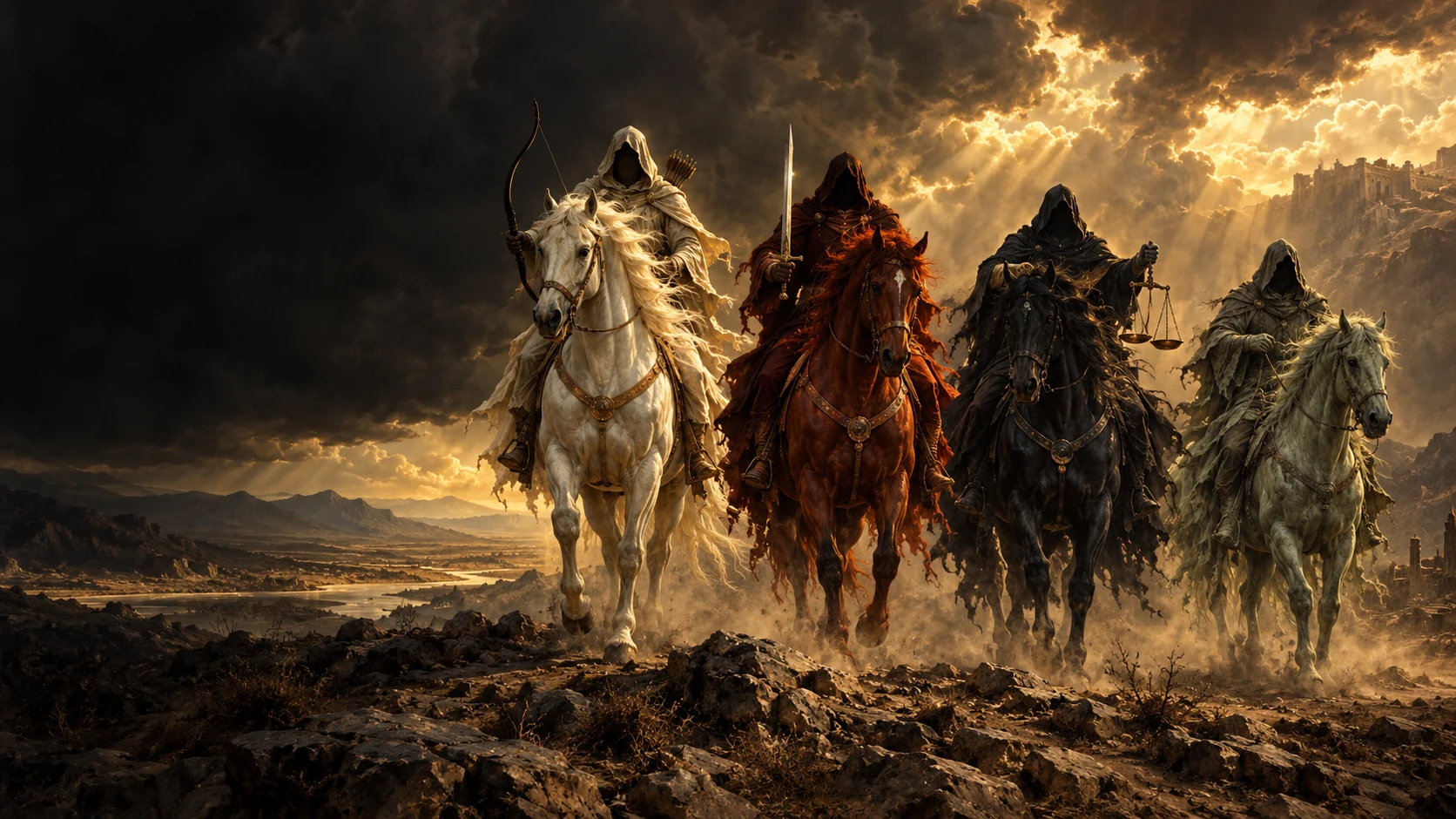
Read the KJV passages, compare Zechariah’s visions, and examine what Scripture does—and does not—say about the riders’ timing.
Explore the Four Horsemen →Leviticus 23 gives Israel the LORD’s appointed times. Many Christian teachers read the seven annual feasts as a calendar of redemption. In that reading, the spring feasts point back to Christ’s first coming and the gift of the Holy Ghost. The fall feasts look ahead to his return.
Paul calls Christ “our passover” and tells the church to keep the feast with “the unleavened bread of sincerity and truth” (1 Corinthians 5:7–8). He calls the risen Christ “the firstfruits of them that slept” (1 Corinthians 15:20). Acts 2:1–4 places the gift of the Holy Ghost on the day of Pentecost.
In a common pre-tribulation reading, Trumpets pictures the gathering of the church. Zola Levitt taught this in his series on the seven feasts. On Christ in Prophecy, Michael Norten told David Reagan it was possible the rapture would fall on the feast itself. Verse by Verse Ministry also sees the rapture here and leaves the calendar day open.
Jack Kelley also taught a pre-tribulation rapture. He read Trumpets as Christ’s return in glory, the Day of Atonement as the judgments that follow, and Tabernacles as Christ dwelling with his people in the kingdom.
Mark Biltz popularized the calendar reading in Decoding the Antichrist and the End Times (Charisma House). He expects the fall feasts to be fulfilled on their appointed days. That is his interpretation.
Numbers 29:1 calls it Yom Teruah, a day of blowing or shouting. Leviticus 23:24 describes a memorial marked by trumpet blasts. Reading the feasts as types means seeing earlier observances as pictures of later events. Scripture gives Israel the days to keep. It leaves open whether future events will happen on those anniversaries.
Tony Garland, writing for Spirit & Truth, describes the date predictions that return each autumn. Jesus said, “But of that day and hour knoweth no man” (Matthew 24:36).
When you compare the feasts with your chart, ask which trumpet each passage describes. The seventh-trumpet study compares Paul’s last trump (1 Corinthians 15:52) with the seventh angel sounding (Revelation 11:15). The feast gives you another way to examine the chart. By itself, it cannot settle where the gathering belongs.
Sources · Leviticus 23 · Numbers 29 · Christ in Prophecy · Norten and Reagan · Christ in Prophecy Journal · fall feasts · Zola Levitt · The Seven Feasts of Israel · Verse by Verse Ministry · feast days · Jack Kelley · the three fall feasts · Spirit & Truth · Q297 · Koinonia House · The Fall Feasts of Israel · Mark Biltz · Charisma · Hebrew of Numbers 29:1
Read the passages. Test the sequence. Let hope lead to faithfulness.
The free book is still being prepared; no completed download is offered yet.
BEYOND THE TIMELINE
Read and share the studies on the rapture, the promised inheritance, the marriage feast and prophecy accountability.
HISTORICAL RESEARCH
Choose a leader, examine the documented sequence, and follow the sources in the Historical Influence Lab.
Historical influence describes transmission; popularity does not establish biblical truth. Test each interpretation against Scripture.
Explore the historical research →