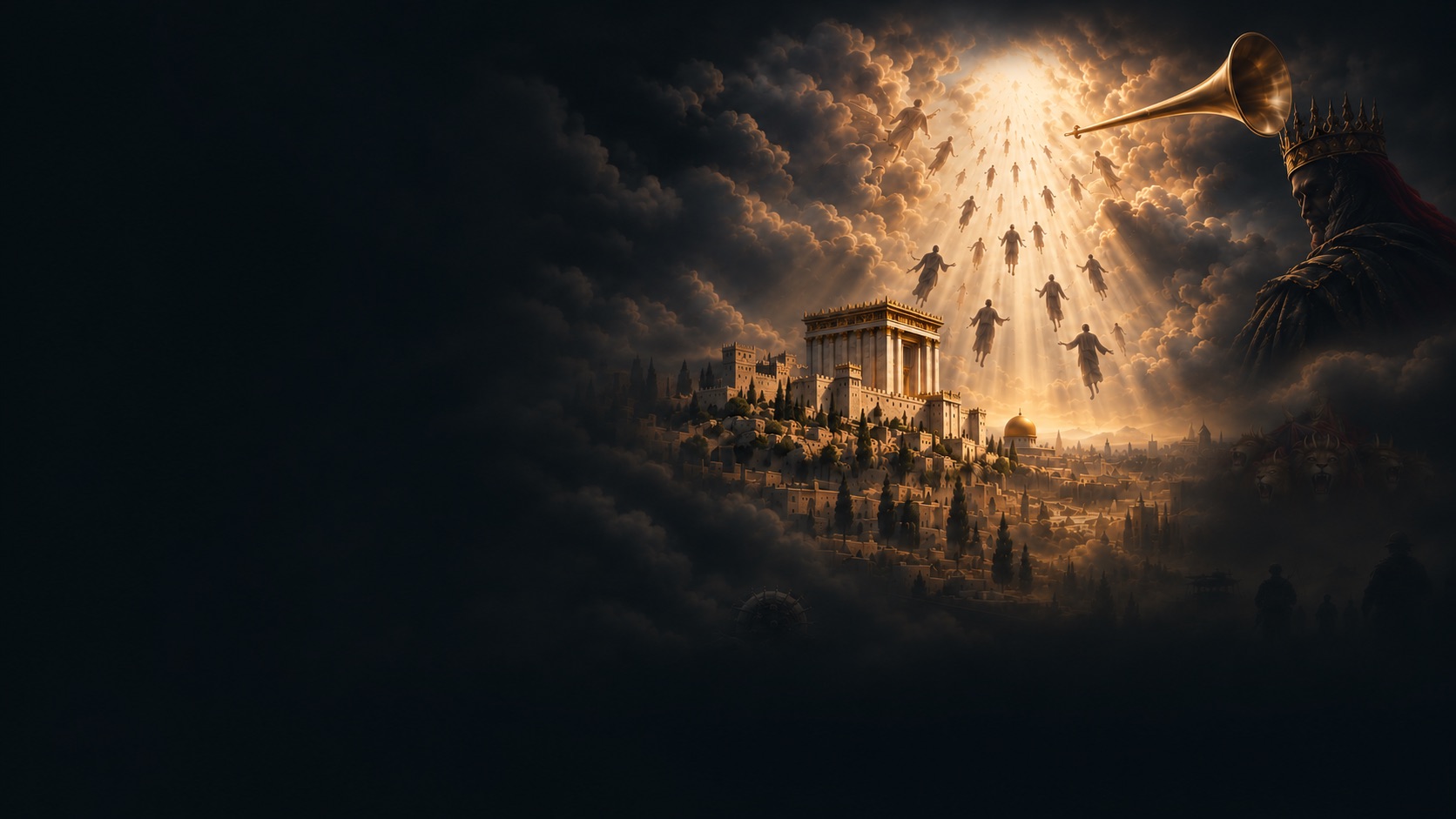
1 Corinthians 15:51–52; 1 Thessalonians 4:16–17; Revelation 11:15–18; 6:16–17
What the text says
Begin with the passages.
Paul places the change at the last trump and describes the trump of God at the resurrection and catching up. John’s seventh trumpet announces the kingdom, wrath, judgment of the dead and reward of God’s servants.
Read the full context ↗What requires interpretation
Examine the connection.
The site proposes that these passages concern the same event, with the rapture before the final vials. Neither author explicitly cross-references the other here. The model must also account for wrath language before the vials, including Revelation 6.
The challenge
What must your reading answer?
What establishes the identity of the trumpets beyond shared themes? Does the proposal explain the earlier wrath language consistently?
Read more closely
What Paul actually says
Paul associates the last trump with the dead being raised incorruptible and the living being changed. In 1 Thessalonians the Lord descends with a shout, the voice of the archangel and the trump of God; the resurrection and catching up follow.
Paul does not number a trumpet as seven in either account. A seventh-trumpet argument must therefore be a comparison across passages. Other proposals—such as a different trumpet context—also need textual support rather than being assumed.
Read 1 Corinthians 15:51–58; 1 Thessalonians 4:13–18 · KJV ↗
What John announces at the seventh
The seventh angel sounds and heavenly voices proclaim the kingdoms becoming the Lord’s and His Christ’s. The elders worship. The announcement includes wrath, the time of the dead to be judged, and reward for God’s servants, prophets, saints and those who fear His name.
These themes make comparison with resurrection and transformation significant. But the announcement does not contain a detailed description of believers being caught up. Its relationship to the surrounding scenes must be examined, including whether announcements anticipate events developed later.
The case—and its hardest objection
This site argues that the last trump and the seventh trumpet identify the same event, and that the rapture precedes the final vials. The argument draws on resurrection, judgment and reward language. It should be assessed openly as the site’s proposal.
The final vials are explicitly full of God’s wrath, but earlier passages also speak of wrath. It would overstate the case to call everything before the vials wrath-free. The model must explain those statements and defend the sequence rather than excluding difficult verses.
A biblical parallel is not an identification
Jericho involves seven priests, seven trumpets, a final-day sequence and victory after the trumpet and shout. Numbers shows trumpets calling assemblies and sounding alarms. These provide biblical contexts for comparing trumpet imagery.
Neither passage explicitly identifies its trumpet with Paul’s last trump or Revelation’s seventh. Use the parallels to ask better questions; do not make them carry a connection they do not expressly state.